
I wonder why Americans add “pot” in the name of a meat pie. In the U.K. this is a “chicken pie with roasted veg”, but here in the states, it is a “chicken pot pie”. It doesn’t really matter to me what it is called, as long as its delicious … which this pie is!
Pot pies or pies in a pastry crust seem to have gone out of fashion. You can’t beat them, however, when the weather is as cold and gloomy as it has been and you need something hearty and comforting. They’re also a great way to use up whatever leftovers you may have in the frig. If you want a real time saver, you can buy pre-made pie dough at the grocery store, and along with a rotisserie chicken and a package of frozen vegetables (all of which I’ve done before), just assemble and bake.
Not today though. The chicken is going to be marinated and the vegetables are going to be roasted, which gives this pie a whole new dimension and depth of flavor. Although this is a ‘from scratch’ recipe, all of it can be done ahead of time … make the dough one day (up to three days in advance) … the vegetables another … and the chicken another. But it’s a very wintry day, and I’m in the mood to bake.
CHICKEN AND ROASTED VEG PIE
Preheated oven – 400°F. Roasting time – 20 to 30 mins. Baking time – 30 mins.
2 to 3 lbs. skinless chicken (breast, leg, thigh or combination)
Pie Crust for 2 9” pies
Marinade:
1/4 cup white wine or chicken broth
2 tablespoons balsamic vinegar
1 tablespoon fresh sage, chopped
1 tablespoon fresh rosemary, chopped
1 teaspoon salt
1 teaspoon pepper
2 cloves garlic, minced
Stock:
1 cup chicken stock
1/2 cup white wine or water
2 teaspoons cornstarch + 2 tablespoons water = slurry
1/2 cup cream
Vegetables:
6 cups vegetables – cut in chunky pieces
– carrots
– sweet potatoes
– onions
– bell peppers, red and/or green
– mushrooms
(or any combination – Brussel sprouts, parsnips, cauliflower, etc)
olive oil
salt and pepper
1 egg
Early in the day (or the day before) prepare the marinade. Mix all in a bowl and set aside. Cut the chicken into cubes, about 2”. Pour the marinade over the chicken, cover and refrigerate … at least two hours. When you are ready to assemble, preheat the oven to 400°F.
Peel and cut the vegetables into chunky pieces. Put them into a bowl and drizzle with olive oil, season with salt and pepper. Spread the veg on a roasting pan and roast for about 30 to 40 minutes until tender and browned. After they are beautifully charred, let them cool and, if too big, cut into bite-sized pieces.

While the vegetables are roasting, heat olive oil in a large saute pan. Remove the chicken pieces from the marinade with a slotted spoon and brown in the hot pan. Don’t fuss with them, let them brown – 3 to 4 minutes. Then add the chicken stock, the remaining marinade and bring to a boil. Meanwhile make a slurry with the cornstarch and water. After the chicken mixture has reached a boil, add the cornstarch slurry to thicken and make a gravy. When it has thickened, take it off the heat and add the cream. (I said this was hearty … not lo-cal.) Taste for seasoning.
Add the vegetables to the chicken mixture and stir to combine. Again, check for seasoning. The liquid may have thinned. If it’s too runny, add more of the slurry to thicken it.

Spoon the chicken and vegetable filling into pie plates … one very large pie plate or casserole, two 8″ pie plates, or many individual ones.

Roll out the pastry dough. Not too thin. Cover the mixture with the pie crust. Press down slightly and seal the edges. Brush with a beaten egg and then cut little slits in the crust for the steam to escape. It’s always fun to decorate with the scraps of pie dough (which, you can see, I did.)

I made one large 9″ and two smaller, single serving pies, which are going into the freezer to be baked and enjoyed another day. Bake in a preheated oven at 375°F for 40 to 45 minutes or until golden brown and the filling is piping hot.
Serve immediately with a nice crisp salad and glass of wine. So delicious. So comforting. So good!

I hope you enjoy this comforting meal as much as we did.
_____________________________________________________________________________

 Line the pie plate (or tart pans) with the pastry. I like to use tart shells … just because they look so pretty. Put the pastry-lined pan into the refrigerator to get really cold.
 Take the pastry out of the refrigerator and place it on a baking tray. Then arrange the sauteed apples with the caramel sauce on the bottom of the pie. Leave a few apples out for decorating the top. Put the baking tray in the oven before pouring in the custard. This will help avoid spillage.
 Pour the custard on top of the apples. Bake at 350° for about 40 to 50 minutes until set (but still a little jiggly in the center). The pastry should be browned and a slight browning on the custard.
 Remove from oven and arrange the saved apples on top. Drizzle with the caramel. Let cool completely before serving. Flaky crust, creamy custard and cinnamon apple goodness … what more could you want this time of year? Now go ahead, put the kettle on, and wait for all the compliments!!
 ~ ~ ~ ~ ~
 Remove from the heat and add the vanilla and butter. Stir til smooth.
 Now it’s time to cut inside each individual square. Cut a 1/4″ border around each square except for two corners. Leave two corners intact. Take one cut corner and bring it over to the inside of the other side. Now do the same with the opposite corner. You should have a diamond pattern (or envelope). Press down slightly around the edges.
 Place the shaped puff pastry on parchment-lined baking sheets and place the baking sheets. Square them off a bit and place the baking sheets into the refrigerator. Puff pastry puffs up much better when its very cold. This is when I preheat the oven.
 Bake the pastry til golden brown, about 20 mins. Remove from oven. Now take a sharp knife and remove the center portion of each pastry, creating a pocket, or cavity for the pastry cream. Place each pastry on a wire rack and let cool completely.
 Now its time to assemble. What could be easier … spoon (or pipe) a dollop of pastry cream into the center of each individual pastry. Place a sliced strawberry on top and sprinkle with powdered sugar. Arrange your pastries on a serving tray until ready to serve. Then show them off to all your guests and wait for the oohs and ahhs. You deserve it!




 As you can see, meals had to be inexpensive, filling and something the children would eat. To get them to eat the more nutritious porridge or stew, a sweet “pudding” was always served. The one they liked the most … JAM ROLY POLY!


 Strawberries are sweet, delicious and good for you (full of antioxidants and very low in calories). And they are so versatile. You can just pop them into your mouth or use them in salads, smoothies and all sorts of desserts from ice cream to shortcakes. You can make jams, jellies and spreads, or dip them into chocolate. They freeze easily, and for some people, they are easy to grow. I, however, have been relegated to a “pick-your-own-fruit” farm where I “pick-my-own-strawberries”. Now, armed with 10 lbs. of strawberries and a three-day window before they start to lose their appeal, it’s time to get cooking.
 Dump the dough onto a lightly floured board and bring together into a round ball. Flatten the ball and gently roll it into an 10″ circle, about 3/4″ thick. To cut out the biscuits, you can use a knife and cut the dough into squares or use a biscuit cutter to cut out rounds. The size, again, is up to you. I like to make smaller ones … using two per serving.


 In Great Britain and Europe, there’s a broader view and range of marzipan which includes using marzipan as fondant to cover cakes, as well as a filling in tarts and pies. While in Spain, I was quite surprised to learn that not only was marzipan invented there (sorry Italy), but there are confectionery shops dedicated to making and, of course, selling marzipan. I don’t know why this surprised and fascinated me, but it did.
 Marzipan which literally translates as March Bread is a sweet, nutty confection known and enjoyed all over the world. Italy, of course, is a large producer, as is Germany and the Middle East, but to proudly wear the D.O. (designation of origin) stamp assigned by the Mazapán de Toledo Counsel, the marzipan must be made in Toledo and contain at least 50% almonds.

 Put the browned steak back into the pot. Pour in the beef stock (homemade or store bought), the ale (Guiness is perfect) and tomato paste. Combine well and then add the bay leaves. Taste to adjust the seasoning – adding salt and pepper as needed.
 If you are making one casserole, then nothing else needs to be done – except for cutting a hole in the middle for the steam to escape while baking. If you are making individual servings, as I did, then cut the pastry for the amount of dishes you are making. I made six ramekins – so I cut the pastry into six pieces – with a hole in the center of each one.
 Place the casserole dish or dishes onto a baking tray – leaking can occur. Place the tray into the oven at 400° and bake for about 30 minutes, or until the pastry is nicely browned. When it’s browned, it’s ready! Remove from the oven and eat!

 These super chocolaty, crunchy biscotti are rich and sweet and delicious! My suggestion … put a few away as a treat for yourself because these are going to disappear quickly. Now you’re ready to curl up on the sofa with a good book and steaming, hot cuppa!!
 The Middle East should really be credited with giving us the origins of the macaron. By the 1st century, they were exploring the culinary possibilities of adding honey, fruit and nuts to food, which resulted with almonds becoming their biggest export. By the 7th century Persians were indulging in rich, luxurious cakes and pastries, made from these ground almonds called “marzipan”. These treats reached Europe by the 14th century and it is actually Italians who created this little marzipan nugget. The name “macaron” comes from the Italian word for paste which is “macaroni” (pasta is a paste made from flour, water and eggs). I grew up calling pasta macaroni, didn’t you?
 The cookies remained an Italian treat until the Italian princess, Catherine de’ Medici, requested her pastry chefs travel with her to France to make these little delicacies which were to be served at her wedding to the future king of France, Henri II. This all occurred in the 16th century, but the almond meringue cookies didn’t become popular until the 18th century when, during the French Revolution, two Benedictine nuns began making and selling the cookies in order to support themselves. Sister Marguerite Gaillot and Sister Marie-Elisabeth Morlot became so popular they were referred to as the “Macaron Sisters” and the village of Nancy in France has now dedicated a square to them.
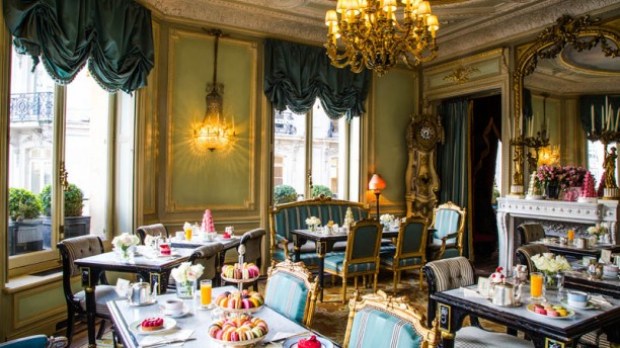 Have you ever been to Ladurée? I have not (but I adore PAUL, their smaller venue).