
The Christmas season is here and we’re all beginning the much-anticipated, sometimes stressful and often-times expensive process of ‘decorating’ for the holiday. From the balsam wreath on the front door to the strings of garlands, lights and, of course, the TREE, it can be an exhausting and exasperating project.
Today, however, we seem to have grown away from the traditional freshly-cut fir tree decorated with ornaments that have been collected over the years, or handed down from generation to generation. Instead, we seem to have gravitated toward artificial trees, with trendy decorating themes, that change each year … which is fine, I guess. But I’m a traditionalist. For me, every tree is unique in its imperfection, and every ornament should have a story to tell. Of course, I’ve been guilty of that last minute box-of- a-dozen-red-balls purchase, but be assured those are the last ornaments to go on the tree, if they make it there at all.
 But, why a tree? When did we decide to bring this outdoor living plant indoors and decorate it? And why December … not January or February? There are so many traditions that we keep alive today, but why?
Let’s start with Adam and Eve. This parable, with which we are all familiar, signifies life and family, and takes place in the “Garden of Eden” where we find the symbolic “Tree of Life”. Whether you follow this doctrine or not, in Medieval times, European Christians did, to the point of bestowing sainthood on Adam and Eve. During that period, every saint was honored with their special communicant service or Mass … St. Thomas had Thomasmass, St. Michael had Michaelmass, Christ had Christmass, etc. The commemorative Mass of St. Adam and St. Eve was on December 24th, the day before the celebration of the birth of Christ (Christmass).
In other parts of the world, pagan groups believed that evergreens symbolized eternal life. While other plants and trees died, the evergreen tree remained continually alive. Because of this phenomena, evergreens were revered. These Pagan civilizations also considered the sun a living god and were fearful of the darker winter months when the days were their shortest. Many pagan groups would, beginning on the shortest day of the year, December 21st, hang evergreens over their doors and windows to keep away evil spirits, and celebrate the slow return of the Sun’s strength.
Now let’s combine the Christian tradition with the Pagan belief. It seems the worshiping of evergreens and, in particular, the fir tree, collided with the conversion of both the Christian and Pagan rituals. There are some who believe that the church tried unsuccessfully to drive the tree cult out of people’s consciousness. Ultimately, instead of ‘fighting them’, the church decided to ‘join them’ and incorporated the decorated evergreen tree, called a ‘Paradise Tree‘, into the religious celebration of the Christ child.

It was actually the Scandinavians who were the first to bring the evergreen tree inside the home and decorate it. And it was the Germans who were the first to light the tree with candles. They decorated their Paradise Tree with apples to represent the Garden of Eden, cookies to represent the Eucharistic host and candles to represent Christ lighting up the world. There is, however, a legend which says it was Martin Luther, the 16th-century Protestant reformer, who was the first to add lighted candles to a tree. While walking home one evening, Reverend Luther was amazed by the brilliant stars twinkling in the heavens. To recapture that scene for his family, he tied lighted candles onto the branches of the tree in his drawing room.

Queen Victoria, Prince Albert and their children decorating a Christmas Tree.
It was well over a hundred years before this tradition of decorating and lighting a “Tree” spread to other parts of Europe and became widely accepted. Contrary to popular believe, it was not Prince Albert, but Queen Victoria’s grandmother, German-born Charlotte, who brought this German custom with her to England when she married King George III. Reports were that Queen Charlotte had an evergreen tree at Windsor Castle, which stood in a large tub in the middle of her drawing room. It was decorated with fruit and lit by candles, with plenty of toys for the children, who were completely enchanted by the spectacle. This decorated TREE became an annual tradition for the Royal family.
It wasn’t, however, until Queen Victoria and Prince Albert began celebrating Christmas with a decorated tree that the rest of Britain adopted this concept of celebrating Christmas. Wanting to emulate everything this Royal couple did, by the end of the 1850s it was a well established Christmas custom to have a decorated evergreen tree in the home of all Brits. It is also believed that Victoria and Albert were the first to have manufactured decorations for their Christmas tree, imported from Germany. Each year, Albert continued to spread the tradition by donating trees to schools, army barracks and royal estates. A tradition which continues to this very day.

German settlers to the new World took the custom of decorated Christmas trees with them as early as the 17th century. By the 19th century, Christmas trees were popular not only in the new World, but in the rest of Europe. Missionaries took the custom of Christmas and decorated trees with them to China and Japan. So by the 20th century, the tradition of a decorated evergreen tree in your home to celebrate Christmas had become a socially accepted custom.
Whether you’re a traditionalist like me, or someone who follows the annual decorating trend, did you ever think that by putting up and decorating your Christmas tree, you would effectively be transforming your living room into a place of pagan ritual?

Merry Christmas!
~ ~ ~ ~ ~
References: Prevail Magazine, Time Magazine, Royal Central,
_____________________________________________________________________________


 He explained the different varieties of apple trees and their location in the orchard, handed us a couple of paper bags and off we went. Picking didn’t take long, as the trees were heavy with fruit … Empire, Macouns, Macintosh, Golden Delicious and Cortland … all red, ripe and ready. After picking … and eating as many as we could … we managed to find our way back to the shed, where the owner weighed our bounty and offered us a slice of pie. Pie? Yes, every day his wife bakes an apple pie for anyone who, after a day of picking, would like to sit, relax and enjoy a slice of homemade apple pie. Needless to say, it was one of the best apple pies we’ve ever had.
 Into a high-sided saucepan, place the entire can of sweetened condensed milk. Completely cover the can with water and bring to a boil. Then cover the saucepan and reduce the heat to a simmer. Let this simmer, covered, for at least two hours, while you make and bake the pudding. Check it every now and then to ensure the can is completely covered with simmering water. Refill water as needed.
 In a large frypan, over medium heat, melt the butter and add the cubed apples. Sprinkle on the dark brown sugar, the cinnamon, nutmeg and the cornstarch. Mix gently. Cover and let it cook down for about 15 minutes or until the apples are softened and a sauce forms. If needed, add a bit of water. Stir gently.
 While the apples are gently cooking, in a mixing bowl, beat the eggs and brown sugar. Add the melted butter and vanilla. Beat in the flour, cinnamon, salt and baking powder. Mix well, but don’t overbeat.
 Spoon the apple filling into the pudding batter. With a wooden spoon, gently mix all together. Then spoon the batter into the buttered ramekins. Not too high. They will rise a bit. Sprinkle with toasted nuts, if you’d like.
 Place the ramekins on the towel-lined baking pan. Then fill the baking pan with hot water until the water comes halfway up the sides of the dishes.
 Cover the entire baking pan tightly with foil and bake at 350°. Bake for 60 to 70 minutes (depending upon the size of the ramekins). No peeking. Puddings take a bit longer to bake than cakes.
 When done, remove the baking pan from the oven and let the puddings rest for 10 minutes. Meanwhile, take the can which has been bubbling away on the stove top, and holding it with a towel, carefully open it. It will be very hot. With a spoon, mix the thick, sweet sauce to smooth it out. Then spoon the toffee sauce into a serving bowl or pitcher.
 To serve, either pop the pudding out of the ramekin and plate it or serve it right in the ramekin … and spoon a generous dollop of toffee sauce on top. For a little extra treat, you might want to have ice cream or whipped cream on hand. This is an absolutely rib-sticking, old fashioned dessert, hearty, sweet and full of chunky apples with a creamy toffee sauce … perfect for a cool Fall evening. i hope you and your family enjoy it as much as we did!!


 All tea comes from one plant, the Camellia Sinensis. The Camellia Sinensis is an evergreen plant, which resembles its cousin, the azalea bush. Yes, there are over 3,000 varieties of this plant, but it still is the leaf of this plant which, after plucking, withering, firing and sorting, gives us “tea”.

 Black teas are sold as “orthodox” (large, unbroken leaves) or as “ctc” (smaller particles called “cut, torn, curled”). Black teas can be from a specific estate or blended, as in English Breakfast, or flavored. The most popular flavored black tea is, of course,
  Is caffeine addictive? Research says “no”, but caffeine does stimulate the nervous system and most of us do crave that alert feeling that comes after having it. I believe it’s better to understand the caffeine content in a cuppa if we start with coffee …

 One of the most memorable places I had the privilege to visit was Darjeeling in India. Yes, Darjeeling is a tea, but it is also a place. “The Land of the Thunderbolt” or Dorje-Ling is what it is called in Tibetan. Situated in the northeast corner of India, high in the Himalayan mountains and bordered by Tibet, Butan and China, this is a place of magnificent beauty. With its slightly acidic, but rich soil, abundant rainfall, high elevation and afternoon cloud cover, its no wonder that some of the best teas in the world are grown here. Known as the “Champagne of Tea”, Darjeeling teas can command some very high price tags.

 The history of tea in this area goes back to the early 1800s when the
  Authentic Darjeeling tea is unique and cannot be grown or manufactured anywhere else in the world. And now Darjeeling tea has a ‘Protected Geographical status’ within the European Union, USA and Australia. As Roquefort is to cheese and Champagne is to wine, Darjeeling now is to tea. These products with their individual characteristics specific to the particular region in which they are produced have been awarded a certificate protecting them from exploitation. Consumers knowing this can now be guaranteed that they are getting genuine Darjeeling. This helps in ensuring the production and sale of Darjeeling tea all over the world. And to identify authentic Darjeelings, a logo was also created showing the profile of a woman holding two leaves and a bud.


 magazine and newspaper clippings – with pictures, of course, so that I would know exactly what the finished dish was suppose to look like.
 Separate 8 large, room-temperature eggs … put the whites aside.
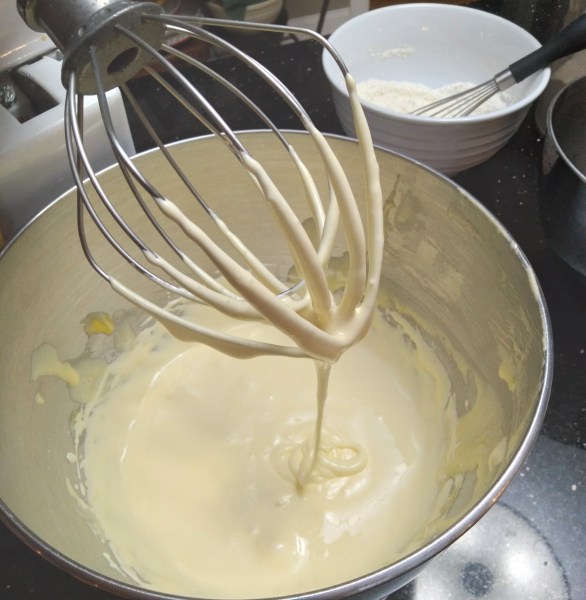 Beat the egg yolks until thick and lemony-colored. Gradually add 2/3 cup sugar. Beat until gloriously thick. Combine the freshly-squeezed orange juice (freshly-squeezed gives the best flavor) with the orange peel. Add this to the egg yolk mixture alternately with the cake flour. Set aside.
 Beat the egg whites with the cream of tartar and salt until the soft peak stage. Very gradually add the other 2/3 cup sugar. Beat on high until stiff peaks form … but do not overbeat. The egg whites should be stiff but not be dry.
 Gently fold the egg whites into the egg yolk mixture.
 Pour into the ungreased 10″ tube pan (or whatever pan you’d like to use). Angel food cakes do not need to be baked in a specific pan. Loaf pans are fine. Bake in a 325° oven for about 50 to 60 minutes.
 When done, a tester will come out clean, the sponge should spring back when touched and the color will be a delicate golden brown.
 Invert the tube pan to cool the cake. Yes, that is what the ‘feet’ are for. After approximately 20 minutes, the cake should easily come out of the pan. Turn right side up. Frost when cooled.
 Is it a “show stopper” as Mary would’ve liked to have seen? No … but I’m very happy with it. The cake is feathery light with just a subtle hint of citrusy orange. I made a quick seven-minute frosting and decorated it with candied orange slices.
 Today, however, a visit to Stonehenge is quite different. Tickets to England’s most popular tourist attractions must be booked in advance … and the cost for a family of four is a hefty £54.90. There is a new and impressive Visitor’s Center with a ticket office, museum, gift shop and coffee shop. The museum has changing exhibits featuring contemporary art, photographs, and treasures from museums around the world.
 Just outside the Visitor’s Center is a fascinating new exhibit of neolithic, or stone age, houses. These yurt-style homes with their thatched roofs are based on houses found during the 2006 excavations in this area. Carbon dating showed that the original buildings were built around 2,500 BC, the same time period the stones were being erected. This fascinating addition to Stonehenge is one which I can’t wait to see.


 For his generous gift to the nation, Cecil was rewarded with a Knighthood. Ultimately, perhaps Cecil was relieved to step out of the quagmire of arguments and debates as to who shall own this world heritage site. The government took possession and in 1919 launched the first of many extensive renovations of Stonehenge, which began with straightening the stones and re-setting them in concrete. Now over a century later, the work continues with the new visitor’s center and neolithic houses.

 The game, which appears to have begun as a training exercise for soldiers, involved the soldiers kicking a small leather ball with their feet through an opening into a net. At the request of the emperor, the soldiers began to form teams and compete against each other. This game of Cuju became so popular that it spread from the army to the royal courts and then down to the people. Because of its fast-growing popularity with people in every class, standardized rules of play had to be established. The sport thrived for over 2,000 years, but, for some reason, began to fade away during the Ming Dynasty (1368-1644).
 Soccer has continued to grow to be the most popular sport in the world. Why? Because all you need is a ball … and it can be played anywhere, on any surface … in a park, on the street where you live, on the beach or a schoolyard. You don’t need expensive equipment. No racquets, no padding, no helmets or knee pads. No fancy footwear or jerseys. Rich or poor, male or female, everyone can play soccer.