
Just a few months ago I posted a blog titled “Gingerbread“. In case you think I might be losing my mind, I’m not (hopefully), this blog is about making (and eating) Gingerbread. If you want to know the origins of how this exotic spice became such an important part of the culture in Great Britain, please click on this link … GINGERBREAD. It will give you all the background you’ve ever wanted to know about ginger and the making of this confection. Meanwhile, I’m actually making my own moist, dense, rich ‘GINGERBREAD‘.
As always, before making any recipe, I go through all my cookbooks (of which I have more than I can count) as well as check all the internet foodie blogs to find the ‘best of the best’ recipes. Some recipes were more like a light, fluffy spice cake with cream cheese frosting. Not what I was looking for at all. What I wanted was an old-fashioned, dense, rich cake-like bread. It should be easily held in your hand, not requiring a plate. It should be packed full of peppery ‘ginger’ flavor … not cinnamon, cloves or allspice. It should be moist … not dry. And, most of all, it should be delicious.
I’ve tried more recipes than I want to admit. And culled from a few different recipes, here is MY favorite by far. It is quite easy to make, but it’s not for the timid. It’s for ginger lovers everywhere. If you want more or less ginger, feel free to adjust the quantities.
GINGERBREAD
Bake at 350° Makes one large round bundt pan, or two or more loaf pans.
3/4 cup butter, cubed
1/2 cup vegetable oil
1/2 cup water
3/4 cup molasses
1/2 cup cane syrup, or corn syrup or honey
1 cup packed dark brown sugar
2-1/2 cups all-purpose flour
1/2 cup cocoa
3 teaspoons baking soda
1 teaspoon salt
3 tablespoons ground ginger (more or less to taste)
1 teaspoon cinnamon
3 large eggs, room temperature
1/2 cup full-fat milk
2 tablespoons grated fresh ginger
 About an hour before you want to make the Gingerbread, combine the following ingredients in a saucepan: Cubed butter, vegetable oil, water, molasses, brown sugar, golden syrup or honey. Simmer over low heat until the butter is melted, the sugar has dissolved and everything is well combined.
 Cool completely before adding this mixture to the dry ingredients. It should be just warm to the touch. If you want to cool this mixture quickly, set the pan into a bowl of ice water.
Preheat the oven to 350° and prepare your baking pans – a large round pan, or as many smaller pans as you’d like. Grease well.
In a large mixing bowl, combine all the dry ingredients: flour, cocoa, baking soda, salt, ground ginger and cinnamon.
 In a separate, smaller bowl, lightly beat together the eggs, milk and grated ginger.
When the syrup mixture has cooled, add it slowly to the dry ingredients. Blend well, but don’t beat. Then add the egg/milk/ginger combination to the batter. Again, be sure to blend well, but be sure not to overbeat the batter. Low speed on an electric mixer is fine. You don’t want to build up the gluten.
 Pour the batter into the greased pan(s) and bake. Depending upon the pan size and shape, it could take between 45 and 60 minutes. Check for doneness when a tester comes out clean.
 Cool for 15 minutes before removing from the pan. Then put on the kettle and don’t be afraid to dive in. It freezes well if you want to wrap it tightly in foil. Or it will keep nicely in the frig for a week, wrapped in cling film.
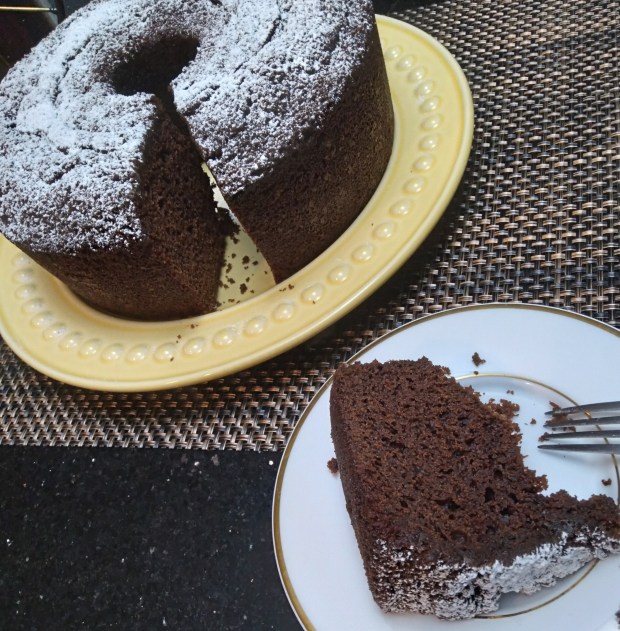 Dense, gingery and moist. I love this Gingerbread warm with a dusting of powered sugar and a big mug of tea! This is perfect for the holidays. Keep one on hand ready to serve for anyone who drops by … or just make to enjoy all by yourself!!
_____________________________________________________________________________


 I’ve read that the first known recipe for ‘gingerbrede’ came from Greece in 2400 BC. Really? How do they know that? I do know, however, that food historians have traced ginger as a seasoning since antiquity. From my research, it seems an Archbishop from Armenia, in the 1st century, is credited with serving his guests a cake made of spices. By the tenth century, its proven that Chinese recipes for ‘spice breads’ were developed using ginger, and by the 13th century European nuns in monasteries were known to be baking ‘gingerbredes’ to ease indigestion. As spices, and in particular ginger, made their way throughout Northern and Western Europe, these breads baked in monasteries became so popular professional bakers began to make them. The ingredients, of course, were a bit different from what we would expect. Ground almonds, breadcrumbs, rosewater, sugar and ginger were mixed together and baked. It wasn’t until the 16th century when eggs and flour were added.
 Did you know Queen Elizabeth I is credited with creating the first “gingerbread man”? Known for her outlandish royal dinners, Queen Elizabeth employed a ‘Royal gingerbread baker’. Among her array of fancy desserts were not only birds, fruits, and castles shaped out of marzipan, but also of gingerbread. The first documented gingerbread-shaped biscuit actually came from the court of Queen Elizabeth when she commissioned figures to be made in the likeness of some of her important guests. They were the hit of the court and soon these biscuits made their way into the bakeries.
 Elaborately decorated gingerbread became so synonymous with all things fancy and elegant that the Guilds began hiring master bakers to create works of art from gingerbread. Bakers began carving wooden boards to create elaborately designed molds to shape individual images. The shapes included not only flowers, birds, and animals, but even people. They were in such demand, kings and queens, lords and ladies, knights and bishops wanted their images captured in “gingerbread”. Should a young woman want to improve her chances of attracting a husband, she would have a “gingerbread man” made for her in the likeness of her gentleman’s image. The hope was that if she could get him to eat the spicy delicacy, he would then fall in love with her. Decorated gingerbread was given as a wedding gift, or to celebrate a birth or special occasion.
 In many European countries, gingerbread is still considered an art form, and the antique mold collections are on display in many museums. According to the Guiness Book of World Records, the largest gingerbread man was made in Norway in November 2009 and weighed 1,435 lbs. And the largest gingerbread house was made in Texas, November 2013 by the Traditions Club – 60 ft. long, 42 ft. wide and 10 ft. tall – all to raise money for St. Joseph’s Hospital.

 The illustrations in this book are remarkable in that they are not photographs but drawn capturing the precise details from each original baked item. The images of wedding cakes are astonishingly beautiful, each having won prizes at the London International Exhibition 100 years ago.
 In addition to the advice and recipes are the original advertisements for all the baking essentials required, from flours and sugars to cake stands and ovens. One advertisement which I found interesting was for a “vegetable butter” made from “cocoanuts, as an excellent substitute for butter, margarine and lard”. Why has it taken us another 100 years to fully incorporate coconut oil into our baking?