
I know, I know … Fruit Cake, the most hated cake in the world! I’ve heard all the jokes . . .
…“only good as a door stop”
… “found one in King Tut’s tomb and it was still edible”
… “advice is like fruit cake, something everyone gives, but no one wants”
… “a cake made during the holidays that’s heavier than the oven it was baked in“
 but I LOVE fruit cake. There I said it! And this Scottish classic is one of my favorites. Why? Because it is made with sweet, thick orange marmalade, giving it a wonderful orangey flavor. And to be an ‘authentic’ Dundee cake, the marmalade should be made with Seville oranges from Spain. If you’ve ever had the opportunity to visit the beautiful city of Seville, you can’t help but gaze in wonder at the over 40,000 orange trees which line the streets. At times, the trees are bursting with so much fruit, the streets are just littered with these brightly-colored orbs.
Sometimes referred to as ‘bitter orange’, the Seville orange originated in China and was among the many foods and spices traded along the spice route. These trees were eventually cultivated in Spain and Portugal around the 10th century. Interestingly, these oranges aren’t really eaten in Spain. More than 15,000 tons are shipped to Great Britain each year.
 How did the oranges end up in Dundee, Scotland? Because of a storm at sea! A Spanish cargo ship carrying goods and produce crashed into the rugged coastline in Dundee. Among the many goods on the ship were oranges. The oranges were ruined and couldn’t be sold, but a local merchant, James Keiller, bought the load at a discounted price. Keiller already sold jams in his shop and incorporated the oranges, fruit, pith and peel, into the recipe. Food historians say it was his mother, Janet Keiller, who then took the marmalade and used it in a fruit cake, now known as the Dundee cake.
Keiller was the first to successfully commercialize his brand of marmalade using these bitter oranges and is responsible for the popularity of Scotland’s sweet breakfast treat. When the British Trademark Registry Act came into existence in 1876, Keiller’s Dundee Orange Marmalade was one of the first brands to be formally registered. In the 1920s, Keiller’s was purchased by Crosse & Blackwell, a name with which most of us are familiar. That company was then sold to another very familiar name in the jam and preserves industry, Robertson’s.
 Other historians say the Dundee cake is attributed to Mary Queen of Scots in the 1500s who didn’t care for traditional fruit cakes with all the glacéd fruits and cherries. To please the Queen, her royal baker then made a cake which only had raisins, almonds and the bitter Seville oranges. But the timelines vary too much for me. The Dundee cake is made with orange marmalade which seems to have been created 100 years after Mary Queen of Scots would have enjoyed it. Although marmalade has been around since Roman times, it was almost always made with quince and honey, as a way of preserving the fruit. The name “marmalade” actually originates from the Portuguese word “marmelo” or quince. Believed to be the first published recipe for orange marmalade was found in a cookbook written by Eliza Cholmondeley in 1677.
 However this spice cake came to be, by the 19th century, the Dundee cake was served in tea rooms across Great Britain and was the dessert of choice for Winston Churchill and Queen Elizabeth II. As with many ‘historical’ foods, an application has been filed by Dundee bakers for protected status for this spice cake with the EU. The bakers’ hope is to keep this centuries old cake from becoming a cheap imitation of the original. Let’s hope the rights are granted.
If you’re a fan of OUTLANDER, I’m sure Claire and Jamie would’ve eaten a few of these almond-studded Scottish fruit cakes during their time at Lallybroch. I may not be a time traveler, but I am a fruit cake lover. And, if you are too, I hope you have an opportunity to make and enjoy this classic fruit cake over the holidays. Its perfect with a steaming hot cuppa!!
~ ~ ~ ~ ~
References: Walkers, Wikipedia, Food List, 196 flavors, IFoodTV, Daily Record, Scotsman Food and Drink, Andalucia
_____________________________________________________________________________

 Admittedly, I have also sold quite a few pieces on EBay, but I also have quite a few pieces with which I will not part. Do I bring them out when guests come over? No … but I love to display them, inspect them and wonder what story lies behind their manufacture. I conjure up images of a romantic industry of rugged, muscular potters, each in their drafty factories, sitting at their wheel throwing on a rough ball of clay and shaping it until the clay morphs into the symmetrical shape the potter had intended, creating the stunning pieces we have come to revere.


 About an hour before you want to make the Gingerbread, combine the following ingredients in a saucepan: Cubed butter, vegetable oil, water, molasses, brown sugar, golden syrup or honey. Simmer over low heat until the butter is melted, the sugar has dissolved and everything is well combined.
 Cool completely before adding this mixture to the dry ingredients. It should be just warm to the touch. If you want to cool this mixture quickly, set the pan into a bowl of ice water.
 In a separate, smaller bowl, lightly beat together the eggs, milk and grated ginger.
 Pour the batter into the greased pan(s) and bake. Depending upon the pan size and shape, it could take between 45 and 60 minutes. Check for doneness when a tester comes out clean.
 Cool for 15 minutes before removing from the pan. Then put on the kettle and don’t be afraid to dive in. It freezes well if you want to wrap it tightly in foil. Or it will keep nicely in the frig for a week, wrapped in cling film.
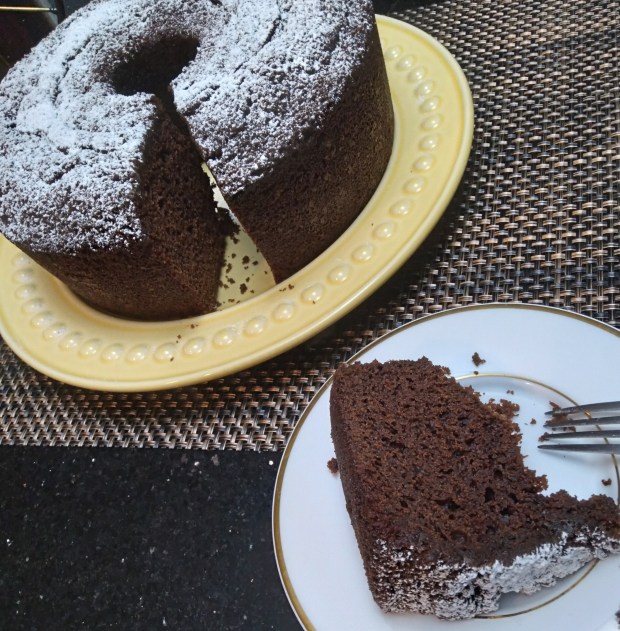 Dense, gingery and moist. I love this Gingerbread warm with a dusting of powered sugar and a big mug of tea! This is perfect for the holidays. Keep one on hand ready to serve for anyone who drops by … or just make to enjoy all by yourself!!
 Finally, in July of 1620, leaving many of the original Separatists behind, the remaining Pilgrims sailed from Holland to Southampton England, on board the Speedwell. This ship proved to be ‘as leaky as a sieve’ with water spouting through every plank. Many of them had, by this time, lost everything and were willing to abandon their quest. After trying three more times to set sail, they put in at Plymouth as the Speedwell went in for repairs. The weeks turned into months. Time was running out and if they didn’t leave immediately, they’d have to wait until Spring.


 Here are a couple of ideas for you. For a dry rub, mix one tablespoon salt, 3 tablespoons each of brown sugar, paprika and Lapsang Souchong with 2 teaspoons black pepper and ground cumin. Grind them all in a mill and keep in a closed jar in the cupboard until you’re ready to use. Or try infusing olive oil with this tea to be used in marinades or to dress vegetables or fish – 2 teaspoons crushed Lapsang into 4 oz. of olive oil, let sit for a week or two and then strain out the tea leaves. Wonderful!
 It was so confusing … but what I really wanted was a classic, cast-iron English AGA cooker. I’d be surprised if you’re not familiar with this icon of a cooker. For over 100 years, the AGA has commanded attention in most English kitchens, from the largest manor houses to the more modest cottages. Chefs including Marco Pierre White, Paul Hollywood and Mary Berry wouldn’t think of cooking on anything else. Jamie Oliver said AGAs “make people better cooks”. Food writer, William Sitwell, said using one was a “much more natural way of cooking”, and actor Gerard Depardieu describes his AGA simply as “fabulous”.
 Although there were many styles of British ranges being used, from wood to coal fired, they tended to be dirty, time consuming and, occasionally, dangerous. They had ovens to bake in and hot plates to simmer things on and they kept the kitchen toasty warm. For proper venting, the ranges needed to be installed into a fireplace opening. The biggest disadvantage was soot falling down the chimney into the food, and the amount of work it took to clean them. The range had to be cleaned every day, carefully removing the ashes and cinders, which were still combustible. The oven had to be swept out, and any grease which splattered needed to be scraped off. The flue needed to be cleaned constantly.


 I actually remember “dish night” at the movie theaters. A very popular promotional event where movie theaters would give away a dish to get theater goers to come in on a slow night. If you went to the movies often enough, it was possible to collect a complete set. In the 1970s supermarkets used this same type of promotion with “Blue Willow”, giving away a different piece each week based upon how much money you spent. Before long, you had the complete set. Blue Willow wasn’t the only pattern given away. Another very popular chinaware was various scenes from Currier & Ives, as well as Blue Liberty.


 We booked the experience in the beautiful countryside of North Yorkshire. Pulling up to the castle, there they were, a fleet of white vehicles all lined up and ready for you to take out. After all the necessary paperwork, licenses, waivers, etc., we were introduced to our co-pilot and handed the keys. Our personable instructor could not have been more experienced or a better host. Fully versed in all the vehicles capabilities, off we went onto Mother Nature’s “track”, with our qualified co-pilot up front, hubby nervously driving and me tucked safely away in the back.
 Starting the drive, you’re taken in by the beauty of the area, from dense, lush forests to open fields and pastures. You can spot deer who perk up when they hear the automobile coming. Pheasant and grouse dart across the terrain. It’s quite beautiful.
 I love all things tea … from the origins of the leaf to the ritualistic preparations, the variety of ethnic traditions, as well as the fascinating accoutrements. For preparation, the simple unadorned, unpretentious Brown Betty is one of my favorite teapots. I know its a name that is familiar to a lot of tea drinkers, but I wonder if anyone knows how this modest, round-bellied pot got its name and why some devout tea drinkers think it the only vessel worthy of steeping a perfect cuppa.

 During the Victorian era, every affluent household had servants. In the grander homes, there were servants who worked “downstairs” and servants who worked “upstairs”. The “downstairs” servants generally were not known by their name and were usually referred to by their job, “cook” or “boots”, but the “upstairs” servants were well known to the lords and ladies of the house and would probably be referred to by a ‘nick name’. MaryJane would become “Mary”. Abigail would become “Abby”. Elizabeth would become “Betty”.
 By the mid-1800s, with many Staffordshire Pottery factories producing them, the teapot had evolved somewhat and became considerably more affordable. And by 1926, it was estimated that the industry was producing approximately 500,000 Brown Betty Teapots per week … making it the most popular, widely used teapot in the country.
 Legend tells us that more than 5,000 years ago, the Chinese emperor, Shen Nung, was sitting under a tree in his garden boiling water when the wind picked up and leaves from the tree drifted down into his pot. Intrigued by the fragrant aroma and beauty of the golden liquid, he drank the infusion and enjoyed it. Tea has played a vital role in the Chinese culture ever since.
 Why is this important? Because China is a very large country, with different languages spoken in different regions, and depending upon the port from which the tea was shipped, is how this beverage got its name.
 The southern trade route, which was discovered by the Portuguese in the 15th century, actually introduced England to tea. This dangerous and long voyage traveled from China through Java to Europe around the Cape of Good Hope up the coast of Africa to Europe. It was these very same Portuguese and Dutch traders who first imported tea … “te” … into Europe. Regular shipments of “te” had begun reaching England by 1610. And with the use of Clipper ships, traveling at over 250 miles a day, the race was on.