This site is about ‘tea‘, as well as ‘toast‘ and ‘travel‘. But, it seems lately I haven’t posted much about the actual beverage ‘tea‘. Many people think this is a site about food only. Actually, it was my love for ‘tea‘ and the closing of my tea business which prompted me to start this blog. I think I still had much more to say on the subject but my audience was gone. Well, I haven’t stopped talking about ‘tea‘ yet.
I do realize that I still live in that ‘tea world’, a world in which most people do not live. So when I overhear someone saying ‘yeah, I can’t drink tea because it has too much caffeine‘, or ‘did you know tea has more caffeine than coffee?‘ I have to step away from the conversation, because it still makes me a little crazy. I feel compelled to set the record straight once more … TEA does not have more caffeine than coffee. In the most simplistic of terms … ” A cup of tea has HALF the caffeine as a cup of coffee.”
Not enough information for you? Okay, then here’s my CAFFEINE 101.

Camellia Sinensis plant
Where does caffeine come from? Well, Mother Nature is responsible for caffeine. She came up with a natural way to protect over 60 plants from destructive leaf, nut and seed-eating predators. When these hungry, little insects try to eat these plants they get a mouthful of this bitter organic compound. For the most part, these plants originated from Asia, Africa and South America, which, of course, is where the trees which give us coffee, cocoa and tea originated. At this point, I am assuming everyone knows tea (not herbal beverages like chamomile, mint, rooibos, hibiscus, etc.) comes from the camellia sinensis plant, which originated in Asia.

Caffeine Structure
Now we’ve established that caffeine is natural. It can, however, be ‘manipulated’ and it can also be ‘harvested’. In the beverage we love so much, there are several factors which determine tea’s caffeine content. In today’s modern world, it begins with the propagation of the bush. Plants grown from clones can produce twice as much caffeine as bushes from seeds. Nitrogen fertilizer can also add another 10% to the normal caffeine level. From there, the caffeine content in the plant can vary according to the picking season. Teas plucked in cooler weather might produce less caffeine than those plucked in the fast growing hot months. Also, things as subtle as the location of the leaf on the stem, or whether its an unfurled bud, can also affect the level of caffeine. And let’s not forget that the longer the infusion (the longer the leaves sit in the water), the greater the caffeine content. Did you know that tea bags, which contain broken leaves, fannings and dust, produce an infusion with far more caffeine than loose leaf tea?
Uber-smart Nigel Melican, research scientist and founder of Teacraft, Ltd., says it best “Caffeine varies in the fresh green leaf depending on fineness of pluck. For any tea, be it black, green or white, the caffeine is highest in the bud. Silver needle (white tea) is 100% bud and has the highest caffeine content. If your white tea is 100% bud then it’s going to be one-third higher in caffeine content than green tea made from two leaves and a bud.”

Learning how to properly pluck tea in China.
Please understand we’re not talking about astronomically high amounts of caffeine … perhaps a variance of 8-10% (which might be just enough to keep some people up at night). The average tea drinker consumes about 180 mg of caffeine per day as compared to the average coffee drinker’s 330 mg per day (far more if they drink robust coffee such as Starbucks).
Upon drinking this naturally-occurring substance, it is absorbed into the small intestine and within 45 minutes is distributed throughout your body. Yes, it is a stimulant . And, yes, it has been shown to increase alertness and concentration, quell headaches (which is why some pharmaceutical companies ‘harvest’ caffeine) and it does speed reaction time. It also increases digestive juices in the stomach (always served after a meal in Asia). Although it does not dehydrate the body, it does stimulate the kidneys, which helps the body eliminate toxins. If caffeine keeps you up at night, avoid drinking it four to five hours before bed (which is the amount of time it takes for the caffeine to work its way out of your system).
 For most of us, caffeine really shouldn’t be a concern. High amounts of caffeine, however, can absolutely have a negative affect on some people. If you are on medication which is affected by caffeine, or if your doctor is asking you to cut caffeine out of your diet, switch to a decaffeinated tea or a caffeine-free herbal. (Remember, caffeine is not present in herbals unless they are blended with tea leaves.) Always consult with your doctor if you have any questions about caffeine’s effects upon your health.
There is much more to say on the subject of caffeine, but I think I’ve gone on enough for the average person. The next time someone tells me ‘tea has more caffeine than coffee’, I hope you’ll realize that, at that moment, I will be doing everything in my power not to go on a rant … as I’ve done here! And, for everyone who may still be confused … ” a cup of tea has HALF the caffeine as a cup of coffee.”
~ ~ ~ ~ ~
References: Cha Dao, Coffee and Health, Wikipedia, Villanova University,


 We then traveled south into the magnificent area of Andalusia with its vast savannahs filled with olive groves and vineyards, surrounded by the majestic Sierra mountain ranges. Our visits to the white-washed villages of Cordoba, Toledo, and Ronda were breathtaking … but no ‘tea’.


 These indigenous people had no experience laboring in this manner, and under deplorable working conditions. The British viewed them as “lazy, indolent and miserable”. As a result, the British began “importing” labor from other parts of India. This “importing” of labor was, in fact, slavery. Recruiting agents were sent into rural areas and promised a good wage and better life to men, women and children … ‘recruits’ who willing to immigrate to Assam. When they had enough ‘recruits’ from one area, they loaded them onto overcrowded boats with appalling conditions for the six- to eight-week trip up the Brahmaputra River. Many of the men, women and children, or ‘coolies’ as they were called (t
 Most often the only source of nourishment for the ‘coolies’ was rice and tea. No, not a good quality tea, but tea made from the dregs of the pluckings, infused with some milk for nourishment, sugar for energy, and spices to cover up the bad taste. As a result, coolies suffered a very high mortality rate. Between 1863 and 1866 half of the 84,000 laborers brought into this area died. As I said, the history of “tea” and this now-beloved drink isn’t the sweetest tale. Many thousands upon thousands of people died from malnourishment, disease and mistreatment.
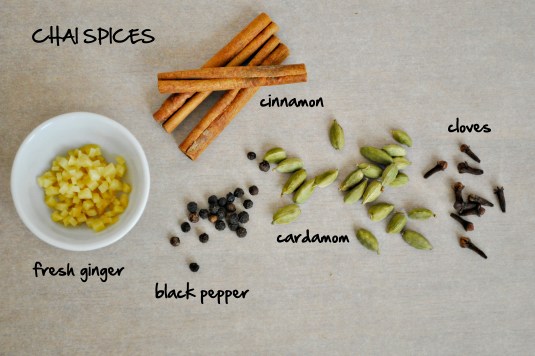
 Yes, making it yourself does take about 15 minutes or more, and you can certainly buy prepared chai in bottles or packages, or even dry chai mixes, but taking those 15 minutes is so worthwhile. And, if you make too much, just put it into the refrigerator and enjoy it cold the next day, over ice, or reheat it. In the summertime, I love to make chai shakes … with a scoop of vanilla ice cream in the blender. Try it. It’s absolutely delicious!!
 The Middle East should really be credited with giving us the origins of the macaron. By the 1st century, they were exploring the culinary possibilities of adding honey, fruit and nuts to food, which resulted with almonds becoming their biggest export. By the 7th century Persians were indulging in rich, luxurious cakes and pastries, made from these ground almonds called “marzipan”. These treats reached Europe by the 14th century and it is actually Italians who created this little marzipan nugget. The name “macaron” comes from the Italian word for paste which is “macaroni” (pasta is a paste made from flour, water and eggs). I grew up calling pasta macaroni, didn’t you?
 The cookies remained an Italian treat until the Italian princess, Catherine de’ Medici, requested her pastry chefs travel with her to France to make these little delicacies which were to be served at her wedding to the future king of France, Henri II. This all occurred in the 16th century, but the almond meringue cookies didn’t become popular until the 18th century when, during the French Revolution, two Benedictine nuns began making and selling the cookies in order to support themselves. Sister Marguerite Gaillot and Sister Marie-Elisabeth Morlot became so popular they were referred to as the “Macaron Sisters” and the village of Nancy in France has now dedicated a square to them.
 Have you ever been to Ladurée? I have not (but I adore PAUL, their smaller venue).

 What kept occurring to me was, “why do they exist?” Although I’ve traveled through all the wonderful countries of Great Britain, never have I seen (except in grocery stores), been offered or served a “breakfast tea”. I’ve been served PG Tips, Yorkshire Gold, Barry’s, Twining’s, A&P, Tetley and a variety of unknown bagged teas. I’ve also been served, on one occasion, a very nice Ceylon. But never anything for breakfast called “breakfast tea” whether it’s from England, Scotland, Ireland or Wales. That doesn’t mean they don’t exist or aren’t being sold in grocery stores. Barry’s now has an English Breakfast and Taylor’s even has a Scottish Breakfast.
 I felt like Goldilocks and the Three Bears … if the Daddy Bear Irish Breakfast was too strong, and the Baby Bear English Breakfast was too weak, then we needed a Momma Bear. How about … Scottish Breakfast!
 I’ve written about Alice before … to mark her


 uld be looked forward to.
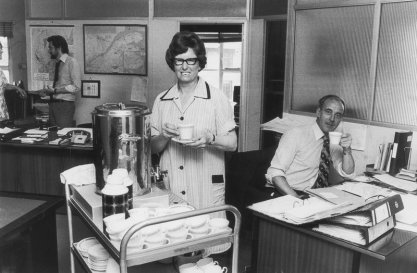 The traditional ‘tea break’ was once upheld as an important social activity in the workplace, but no more. A recent study in the U.K. of over 2,000 workers were asked about ‘tea breaks’ and, sadly, 76% responded they were to busy to take a proper break. Stepping away from the desk or workstation for a short break has actually been shown to increase productivity in workers, not to mention the valuable social aspect and morale boost that comes from a good cuppa, shared with colleagues.
 How about bacon, avocado and poached egg on toast … or a garlicky ricotta cheese and English peas spread with a hint of lemon … or a thick slab of roasted turkey breast smothered in pan roasted drippings (yes, I used to have that same lunch sitting at the Kresge’s counter with my grandmother) … or Nutella and banana slices, a sprinkle of pecans and topped with Marshmallow Fluff under the broiler all melted and gooey? My ‘toast’ would not be thinly sliced, pre-packaged white bread. It would be crusty, thick slices of artisanal breads from sourdough to whole grains.
 The word ‘toast,’ in fact, comes from the Latin word tostum, meaning to scorch or burn. It is believed that 5,000 years ago Egyptians used ‘toasting’ bread was a way of preserving it. (Not quite sure how researchers have been able to determine that time line.) Romans also preserved bread by toasting it, and this continued to be spread throughout Europe. The British really took to ‘toasting’ (what goes better with a cuppa?). And, of course, anything that was popular in Europe found its way to the Americas. Cutting slabs of bread and roasting them on an open fire sounds intoxicating and romantic to me.
 st invention of all time, although sliced bread wasn’t invented until 1928. I’m not sure how popular it was, having to lay your bread against the coils and and watch it, quickly taking the bread off before it burned. It wasn’t until the 1920s when the electric toaster as we know it today was perfected, evolving into a two-slice, pop-up device with a timer. And with the invention of pre-sliced bread, the world was changed forever.

 ay we see that cup? We’ve never seen one quite so beautiful.”