
Today you might think it a very thoughtful gesture to ‘bake a cake’ for your loved one … especially for Valentine’s Day. But there was a time, in northern Britain, when baking a cake to show your love was exactly what you did.
Lancashire County, north of Cheshire and west of Yorkshire, was a very working-class area. Although the low lands were and are important agricultural areas, the predominant industries were coal mining and textile mills. The Industrial Revolution actually started in this county with the invention of steam power, fueled by coal, and the resulting creation of the factory system. The coal mines were staffed by men (women were forbidden to work underground in the mines … but that’s a story for another day), and the textile mills were staffed by women. The work was hard, usually six days a week, with little time and few places for socializing. But these young, hard-working men and women found a way.

Each Saturday and/or Sunday, eager-to-meet-the-opposite-sex, young men and women would dress in their finery, and along a designated area of the town square … women friends together on one side of the street … men on the other … each group would stroll or “promenade” up and down the streets. Hopefully, you might catch the eye of the opposite sex and, if you liked what you saw, you would accidentally meet at the local tea shop. Different towns had different designated “promenades” and “accidental meeting spots”. In some towns the “sorting” process was even more segregated. In one part of town the promenade would be comprised of only factory workers, while across town, would be those who worked in offices. The end result, however, was the same … to find true love.
We’re all familiar with the old saying “a way to a man’s heart is through his stomach”, well this is where the “courting cake” makes its appearance. Should the connection be made and true love was found, the young woman would bake her betrothed a cake … a “courting cake“. Was this to impress the young man or perhaps the potential mother-in-law, we’ll never know, but the cake was always the same … a shortbread base, filled with fresh strawberries and whipped cream. How can you go wrong with that classic combination?
 This tradition didn’t just exist in England. It actually crossed the Atlantic into America, as so many traditions did. The future “first lady of the United States”, Mary Todd, made this cake for her betrothed, Abraham Lincoln. Upon tasting it, Lincoln proclaimed, “it was the best cake he had ever had”. This recipe eventually became a tradition in the Lincoln home and is printed in Mary Todd’s cookbook.
As a symbol of love and in keeping with the Lancashire tradition, in the last public appearance before they were married, Kate Middleton and Prince William were presented with a courting cake. The shortbread-based, two-layer cake was baked was in the shape of a heart with the couple’s names on the top.
I’m all about keeping traditions alive and with Valentine’s Day fast approaching, I think my day is going to be spent making a “courting cake” to show my love for my special guy.
COURTING CAKE
Bake 350°F. 25-30 mins. Makes one two-layer cake.
1 cup butter, softened
1 cup sugar
4 large eggs, room temperature
2 tsp. vanilla
1/4 cup milk
2-3/4 cups all purpose flour
4 tsp. baking powder
1 tsp. salt
2 cups heavy cream
2 cups strawberries
1/4 cup confectioners sugar
Butter and flour two (or three) round cake pans. In a large bowl cream together the butter and sugar until light and fluffy … about 6 to 8 mins. Beat in eggs, one at a time. Add vanilla. In a separate bowl, thoroughly sift together dry ingredients. Fold the dry ingredients into the butter/sugar mixture. Slowly add the milk.
Divide the batter evenly between the prepared pans. Bake between 20 to 30 mins (a little less if using three pans). The top should be lightly browned and firm to the touch. Remove and cool thoroughly.
Meanwhile, slice the strawberries and whip the heavy cream. I like a touch of vanilla and tablespoon or two of confectioners sugar in my whipped cream.
To assemble, place one layer on the plate, top with half the whipped cream (or 1/3 if making three layers) and half the strawberries. Place the top layer on and repeat. Be sure to arrange the berries in a decorative pattern. Sprinkle with confectioners sugar and enjoy.
~ ~ ~ ~ ~
References: Downton Abbey Cooks, New Opinions, Lancashire Life, Curious Taste Bud
____________________________________________________________________________

 During the middle ages, beer and ale were the most common drinks in Britain. Because many of the rivers and waterways in the cities were polluted, water, at that time was not always safe to drink. Beer (a much less alcoholic version than we know today) was drunk with every meal, by everyone, every day. Providing the bulk of the caloric intake, beer was also believed to be nutritionally good for you.
 With the death of Queen Elizabeth’s husband, the beloved Prince Albert in 1871, a local pub owner decides to create a drink in his honor. By combining Guinness’ Stout with champagne, he created the Black Velvet, a drink that is still very popular today.
 The Guinness brewery grew by leaps and bounds and remained in the family for four generations. The original 4-1/2 acre property grew to where it boasted its own medical facility, fire department, railway system and canteens; and it took very good care of its workers. By the 1900s the brewery provided unparalleled benefits for its 5,000 employees, costing the brewery one-fifth of its total wages.


 Credit for the “Bourbon” biscuit, the “Custard Creme” and “Nice” biscuits go to Harold Trixie, not an employee of Peek Frean, but housemaster at the King Edward VI Boarding School in Nottinghamshire. Harold’s father was a baker, and created the “two biscuits sandwiched together with a creamy filling”. Boarding schools at that time were notorious for underfeeding their students. Remembering the French-inspired baked goods his father would make, Trixie used the same method, a soft filling between a harder outer shell, to make biscuits for his young male students. Disguised as a demonstration of good etiquette, Trixie began hosting informal ‘afternoon tea’ sessions at the boy’s school, bringing in his own baked goods and biscuits. Because of the extra sugar and fat provided by the biscuits, it was noticed that Harold Trixie’s students had begun to outperform their peers. His chocolate creation was named the ‘Bourbon’ after the French noblemen’s House of Bourbon.
 Not to say that women from other countries were less so, or had to endure less, but this story about Mary Mallon‘s need to survive seemed personal. Coming from a large family of strong Irish women, this required a bit more research.





 As you can see, meals had to be inexpensive, filling and something the children would eat. To get them to eat the more nutritious porridge or stew, a sweet “pudding” was always served. The one they liked the most … JAM ROLY POLY!


 This was not meant to be a post about the fictitious Downton Abbey, but about the real and factual Highclere Castle, home of the Carnarvon family. The stories have been taken from the private archives … all richly detailed, including beautiful period photographs … in the Countess of Carnarvon’s book, LADY CATHERINE AND THE REAL DOWNTON ABBEY.
 In Great Britain and Europe, there’s a broader view and range of marzipan which includes using marzipan as fondant to cover cakes, as well as a filling in tarts and pies. While in Spain, I was quite surprised to learn that not only was marzipan invented there (sorry Italy), but there are confectionery shops dedicated to making and, of course, selling marzipan. I don’t know why this surprised and fascinated me, but it did.
 Marzipan which literally translates as March Bread is a sweet, nutty confection known and enjoyed all over the world. Italy, of course, is a large producer, as is Germany and the Middle East, but to proudly wear the D.O. (designation of origin) stamp assigned by the Mazapán de Toledo Counsel, the marzipan must be made in Toledo and contain at least 50% almonds.

 Or if you were lucky enough to have a Mom who enjoyed baking, you probably had one of Mom’s yummy, little cakes for your lunchtime dessert. Cupcakes were child-sized, sweet desserts, which, for the most part, were served only at birthday parties and sold at school bake sales.

 What once was a simple, little lunchbox treat has grown into a cottage industry. Customers patiently line up at cupcake food trucks anxious to try some of the creative, and occasionally unusual, flavors which seem to be a very popular trend. No longer are we satisfied with vanilla. Now it has to be peanut butter fudge, lemon blueberry ripple, salted caramel apple, banana toffee crunch …. and more.
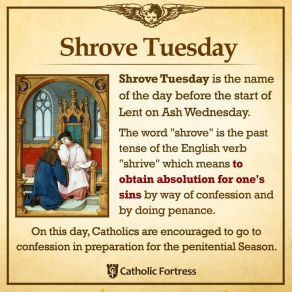 Wednesday is the beginning of the solemn Lenten season, a time of penance and renewal before Easter. Sunday starts the three-day celebration period before Lent, which is commonly known as Mardi Gras or Carnival. In medieval times it was known as “Shrovetide“, with the final day called Shrove Tuesday. (The name ‘shrove’ comes from ‘shrive’, which refers to the ritual of confessing sins.)
 Although it is no longer a holiday, the bell is still rung today in villages across England and Shrove Tuesday celebrations are everywhere. If you’d like to enter the now famous Olney race, the rules are very strict. The race starts promptly at 11:55 am. Bring your skillet. Competitors have to be local housewives and must wear an apron and a hat or scarf. The pancake flippers start at the market place in Olney and race to the Church of St. Peter, flipping their pancakes along the way.