
We’ve had the opportunity to visit Stonehenge a couple of times. The first time was quite a few years ago when Stonehenge was not the massive tourist attraction it is today. Yes, there was a modest entrance fee, but the site was quite accessible. A small fence, which you could easily step over, surrounded the stones and there was a path which circled the stones for walking. You could spend an entire afternoon just enjoying the beauty of the area with its grassy knolls and meadows.
 Today, however, a visit to Stonehenge is quite different. Tickets to England’s most popular tourist attractions must be booked in advance … and the cost for a family of four is a hefty £54.90. There is a new and impressive Visitor’s Center with a ticket office, museum, gift shop and coffee shop. The museum has changing exhibits featuring contemporary art, photographs, and treasures from museums around the world.
 Just outside the Visitor’s Center is a fascinating new exhibit of neolithic, or stone age, houses. These yurt-style homes with their thatched roofs are based on houses found during the 2006 excavations in this area. Carbon dating showed that the original buildings were built around 2,500 BC, the same time period the stones were being erected. This fascinating addition to Stonehenge is one which I can’t wait to see.
Stonehenge has been a curiosity since the beginning of recorded time. Studies and surveys have led researchers to speculate that this circle of stones could have been anything from a Roman fort to a Druid monument. What we have learned is that the people who built Stonehenge were farmers and knowing the changing of the seasons would be very important to them. The layout of Stonehenge is positioned in relation to the solstices, or the sun’s movement. In addition to knowing what to expect with the changing seasons, Stonehenge also played an important part in the lives of these early people spiritually. The cremated remains of over 150 people have been found buried here.
Today, this ancient monument is a registered UNESCO World Heritage site and is managed by the English Heritage, a registered charity that manages over 400 of England’s historic buildings and monuments. But, did you know that at one time these ancient stones were privately owned?

King Henry VIII
In 1540 King Henry VIII took ownership of Stonehenge and the surrounding land from the monks at Amesbury Abbey. Many names and transfers of ownership occurred over the next 300 years until the Antrobus family of Cheshire bought the estate in 1824. Always curious, souvenir hunters plagued these prehistoric stones, chiseling chips out of the blocks, etching their names into the stones, digging holes in the ground, until one day in 1901 one of the enormous uprights and its lintel crashed to the ground.
Edmund Antrobus was forced to fence off approximately 20 acres around the monument, hire a guard, and prop up the other stones with wooden planks and poles. Meanwhile, the construction of a new railway and roads brought many new visitors to the area. Continued concern for the safety of the visitors grew until Edmund, with the help of the Society of Antiquaries, organized a restoration of the neglected ruins, causing him to charge a one-shilling admission fee.
Edmund’s son, the last heir to the Antrobus family, was killed fighting in France during World War I. And when Edmund died a few months later, the family decided to put the estate, which included Stonehenge, up for sale.

Cecil and his daughter, Mary, on board RMS Aquitania, May 1926
Now let’s meet Cecil Chubb. Cecil was born to a leathersmith in 1876 in a small village not far from Stonehenge. Cecil studied hard, worked hard and became a school teacher at the age of 14. Chubb continued his studies and eventually became a lawyer, opening his own law firm. In 1902 Chubb married Mary Finch. When Mary’s uncle, Dr. Corbin Finch, died in 1910, he left the Fisherton House Asylum, a psychiatric hospital near Salisbury, which had been in the family for years, to his daughter. But she wasn’t capable of managing it, so she employed the help of Cecil. Chubb then decided to give up his law firm, and he and Mary moved back to Salisbury to run the hospital.
An astute businessman, Cecil made the hospital a great success, growing it to the largest private hospital in all of England. He introduced new treatments, made the patients lives better and easier, returning most to their homes. He also worked closely with military casualties, using his own home when necessary to accommodate soldiers returning from the war.
On September 21, 1915, a local auction was set to take place in Salisbury. The auction by Knight Frank & Rutley estate agents included “Lot 15. Stonehenge with about 30 acres, 2 rods, 37 perches of adjoining downland.” In the catalogue, Lot 15 was also described as “a place of sanctity dedicated to the observation or adoration of the sun”. Bidding began at £5000, but there seemed to be little interest. The auctioneer, Sir Howard Frank, was not at all impressed and temporarily stopped the bidding. He voiced his disappointment and started again. Although Cecil had no intention of bidding, in his own words: “while I was in the room I thought a Salisbury man ought to buy it and that is how it was done”. The highest bid was a mere £6600 and it was from Sir Cecil Herbert Edward Chubb.

Lot 15 – Stonehenge, with a marginal note recording the price it sold for.
Legend says Cecil was sent by his wife to buy some household items, dining chairs, curtains, etc. Legend also says Cecil was looking for a birthday gift for Mary. We’ll never know if either of these are true. But Cecil did buy Lot 15 and Stonehenge. There were many, however, who accused Chubb of snatching up this land with its tourist-attracting monument as another money-making business venture, which he vehemently denied. He told The Times on October 7, 1915:
“Before the sale I never discussed Stonehenge with a view to purchase with anyone, and at the time of going to the sale I did not even know any figures as the receipts. I think I said before that when I went into the sale-room, I had no intention of buying, and I certainly did not look upon it as an investment”
Chubb purchased the land on a whim, unaware that he would become involved in a number of political arguments about public access, entrance fees, and abuse of the land. Cecil owned the land for three years and then in 1918, he contacted the government department ‘Office of Works’ interested in antiquities and offered the land and the monument to the country as a gift. But . . . he had three provisions. The first was that local residents should continue to have free access to it. The second was that entrance fee should never be more than a shilling. Lastly, that the stones remain in their present condition and no building be erected within 400 yards of the stones themselves.
In his letter announcing the donation of Stonehenge, Chubb wrote:
“Stonehenge is perhaps the best known and the most interesting of our national monuments and has always appealed strongly to the British imagination. To me, who was born close to it and during my boyhood and youth visited it at all hours of the day and night, under every conceivable condition of weather—in driving tempests of hail, rain and snow, fierce thunderstorms, glorious moonlight and beautiful sunshine, it always has had an inexpressible charm. I became owner of it with a deep sense of pleasure, and had contemplated that it might remain a cherished possession of my family for long years to come. It has, however, been pressed upon me that the nation would like to have it for its own, and would prize it most highly.”
 For his generous gift to the nation, Cecil was rewarded with a Knighthood. Ultimately, perhaps Cecil was relieved to step out of the quagmire of arguments and debates as to who shall own this world heritage site. The government took possession and in 1919 launched the first of many extensive renovations of Stonehenge, which began with straightening the stones and re-setting them in concrete. Now over a century later, the work continues with the new visitor’s center and neolithic houses.
Stonehenge may be the best known prehistoric site in the world. Although the entrance fee is considerably more than a shilling, I hope some day you get the opportunity to visit. This “place of sanctity dedicated to the observation or adoration of the sun” will be a memorable experience.
~ ~ ~ ~ ~
References: Freemasons, Ancient Origins, Wikipedia, English Heritage, Stonehenge Tours, History, Stonehenge Monument, Daily Telegraph
_____________________________________________________________________________


 The game, which appears to have begun as a training exercise for soldiers, involved the soldiers kicking a small leather ball with their feet through an opening into a net. At the request of the emperor, the soldiers began to form teams and compete against each other. This game of Cuju became so popular that it spread from the army to the royal courts and then down to the people. Because of its fast-growing popularity with people in every class, standardized rules of play had to be established. The sport thrived for over 2,000 years, but, for some reason, began to fade away during the Ming Dynasty (1368-1644).
 Soccer has continued to grow to be the most popular sport in the world. Why? Because all you need is a ball … and it can be played anywhere, on any surface … in a park, on the street where you live, on the beach or a schoolyard. You don’t need expensive equipment. No racquets, no padding, no helmets or knee pads. No fancy footwear or jerseys. Rich or poor, male or female, everyone can play soccer.
 Very easy to get to, the fastest and most fun way is by hovercraft (which, of course, we did). A quick ten-minute ride floating over the ocean and you’re there! The hovercraft docks in the small hamlet of Ryde. Now a little down-on-its-heels, this once thriving beachfront community still boasts a grand lady of a hotel, The Royal Esplanade. An impressive Victorian structure, built in 1865, on the site of what was Kemps Original Royal Baths.
 During Victorian times, men and women were segregated at the beach. To be seen in your bathing costume was scandalous! Bathing Machines allowed an individual to enter, in their street clothes, on land, at one end … change into their bathing costume … and exit from the other end … stepping down into the sea. If you wished to use a Bathing Machine, you would go to a waiting room, pay your fee and your name would be put on a list. First come … first serve. While waiting, of course, you’d have a cuppa, read the newspaper or chat with other customers. It was very social. Friends of the same sex would go together, or family members could share a Machine.
 Most people could not swim. If the person using the bathing machine was not a strong swimmer, he or she could request a ‘dipper’. A dipper was a strong swimmer, of the same sex as the customer, of course, who would assist the customer in and out of the ocean, or teach them how to swim. Additionally, a cord might be tied around the customer’s waist and then tied to the end of the box, making sure he or she was not ‘carried out to sea’.
 Queen Victoria and Prince Albert had a bathing machine (which has been recently restored and is on display at Osborne Beach). The Queen’s bathing machine was quite ornate with not only a front porch, but curtains, and a toilet.
 The BATHING MACHINE might be a throwback to Victorian times, but given our bulging Covid-15 populace, and the fact that its already February and we’re still social distancing, it could quite possibly make a comeback this year.

 With their newly-gained wealth, the Vikings or Norsemen continued the takeover and started to send for their families. They saw potential in colonizing this land, and established settlements. It is estimated that, at this time, around 200,000 people left Scandinavia and settled in, not only Great Britain, but also parts of Russia, Iceland, Newfoundland and even France and Italy. These Scandinavians were not learned men. They were warriors, explorers, skilled craftsmen, boat-builders and traders, farmers and fishermen. They were not historiographers and left very little in written form of their activities. Thankfully, other countries documented their arrival, take over and unrelenting tyranny.
 Over the next three hundred years, the armies continued to raid and loot, destroying the large regions of the country and forced the English lords to begin collecting money for them. This became, in fact, the first known universal tax in England. The Vikings settled in Ireland as well as England establishing colonies throughout each country, but when they captured York in 867 A.D. (Viking name of Yorvik), they decided to make that city their capital, thus beginning the Viking Age.
 Over the next five years, the excavation site grew and grew. With the help of students from all over the world, and even inmates on day release, professional and local archaeologists uncovered the most remarkable discoveries about the Viking Age. From this site, we learned how the Viking people lived … what they ate, what they did for a living, what goods they sold. Over 40,000 artefacts were found and catalogued.
 … after three years, utilizing the experienced talents of designers, architects, sculptors, taxidermists, leather workers, silversmiths, and construction experts, The

 Although it began in the 18th century, the tradition of Women’s Christmas is still strong in western Ireland. Irish men, realizing the hard work it took their tireless spouses to organize the meals, the gifts, the decorating and the get-togethers with family and friends, took on all the household duties for the day – cooked, cleaned and looked after the children. The mothers, aunts, sisters, and daughters then left all the chores behind and went out to celebrate. For some it may have been a house party or a quiet tea with friends. For others, it may have been a night out at a public house. Some choose to exchange gifts, others not. One thing was for certain though, and that is women were expected to rest. An article from the Irish Times in 1998 joked that even God rested on the seventh day, Irish women didn’t stop until the twelfth!


 but I LOVE fruit cake. There I said it! And this Scottish classic is one of my favorites. Why? Because it is made with sweet, thick orange marmalade, giving it a wonderful orangey flavor. And to be an ‘authentic’ Dundee cake, the marmalade should be made with Seville oranges from Spain. If you’ve ever had the opportunity to visit the beautiful city of Seville, you can’t help but gaze in wonder at the over 40,000 orange trees which line the streets. At times, the trees are bursting with so much fruit, the streets are just littered with these brightly-colored orbs.
 How did the oranges end up in Dundee, Scotland? Because of a storm at sea! A Spanish cargo ship carrying goods and produce crashed into the rugged coastline in Dundee. Among the many goods on the ship were oranges. The oranges were ruined and couldn’t be sold, but a local merchant, James Keiller, bought the load at a discounted price. Keiller already sold jams in his shop and incorporated the oranges, fruit, pith and peel, into the recipe. Food historians say it was his mother, Janet Keiller, who then took the marmalade and used it in a fruit cake, now known as the Dundee cake.
 Other historians say the Dundee cake is attributed to Mary Queen of Scots in the 1500s who didn’t care for traditional fruit cakes with all the glacéd fruits and cherries. To please the Queen, her royal baker then made a cake which only had raisins, almonds and the bitter Seville oranges. But the timelines vary too much for me. The Dundee cake is made with orange marmalade which seems to have been created 100 years after Mary Queen of Scots would have enjoyed it. Although marmalade has been around since Roman times, it was almost always made with quince and honey, as a way of preserving the fruit. The name “marmalade” actually originates from the Portuguese word “marmelo” or quince. Believed to be the first published recipe for orange marmalade was found in a cookbook written by Eliza Cholmondeley in 1677.
 However this spice cake came to be, by the 19th century, the Dundee cake was served in tea rooms across Great Britain and was the dessert of choice for Winston Churchill and Queen Elizabeth II. As with many ‘historical’ foods, an application has been filed by Dundee bakers for protected status for this spice cake with the EU. The bakers’ hope is to keep this centuries old cake from becoming a cheap imitation of the original. Let’s hope the rights are granted.
 Admittedly, I have also sold quite a few pieces on EBay, but I also have quite a few pieces with which I will not part. Do I bring them out when guests come over? No … but I love to display them, inspect them and wonder what story lies behind their manufacture. I conjure up images of a romantic industry of rugged, muscular potters, each in their drafty factories, sitting at their wheel throwing on a rough ball of clay and shaping it until the clay morphs into the symmetrical shape the potter had intended, creating the stunning pieces we have come to revere.


 About an hour before you want to make the Gingerbread, combine the following ingredients in a saucepan: Cubed butter, vegetable oil, water, molasses, brown sugar, golden syrup or honey. Simmer over low heat until the butter is melted, the sugar has dissolved and everything is well combined.
 Cool completely before adding this mixture to the dry ingredients. It should be just warm to the touch. If you want to cool this mixture quickly, set the pan into a bowl of ice water.
 In a separate, smaller bowl, lightly beat together the eggs, milk and grated ginger.
 Pour the batter into the greased pan(s) and bake. Depending upon the pan size and shape, it could take between 45 and 60 minutes. Check for doneness when a tester comes out clean.
 Cool for 15 minutes before removing from the pan. Then put on the kettle and don’t be afraid to dive in. It freezes well if you want to wrap it tightly in foil. Or it will keep nicely in the frig for a week, wrapped in cling film.
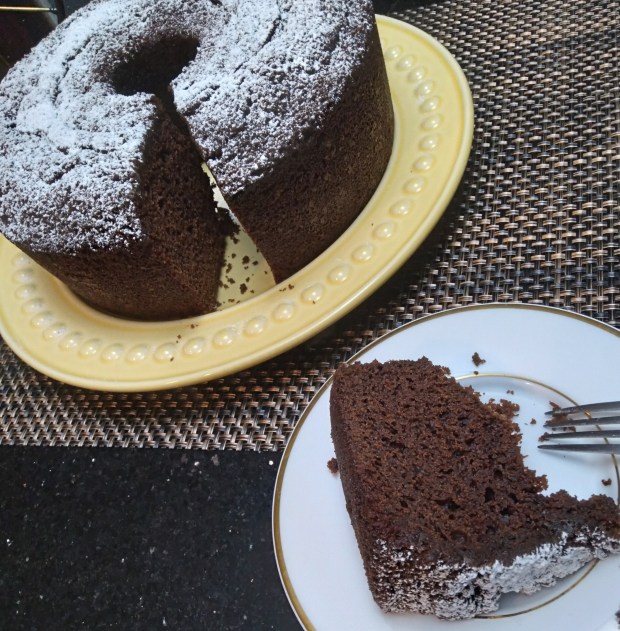 Dense, gingery and moist. I love this Gingerbread warm with a dusting of powered sugar and a big mug of tea! This is perfect for the holidays. Keep one on hand ready to serve for anyone who drops by … or just make to enjoy all by yourself!!
 Finally, in July of 1620, leaving many of the original Separatists behind, the remaining Pilgrims sailed from Holland to Southampton England, on board the Speedwell. This ship proved to be ‘as leaky as a sieve’ with water spouting through every plank. Many of them had, by this time, lost everything and were willing to abandon their quest. After trying three more times to set sail, they put in at Plymouth as the Speedwell went in for repairs. The weeks turned into months. Time was running out and if they didn’t leave immediately, they’d have to wait until Spring.


 Here are a couple of ideas for you. For a dry rub, mix one tablespoon salt, 3 tablespoons each of brown sugar, paprika and Lapsang Souchong with 2 teaspoons black pepper and ground cumin. Grind them all in a mill and keep in a closed jar in the cupboard until you’re ready to use. Or try infusing olive oil with this tea to be used in marinades or to dress vegetables or fish – 2 teaspoons crushed Lapsang into 4 oz. of olive oil, let sit for a week or two and then strain out the tea leaves. Wonderful!